
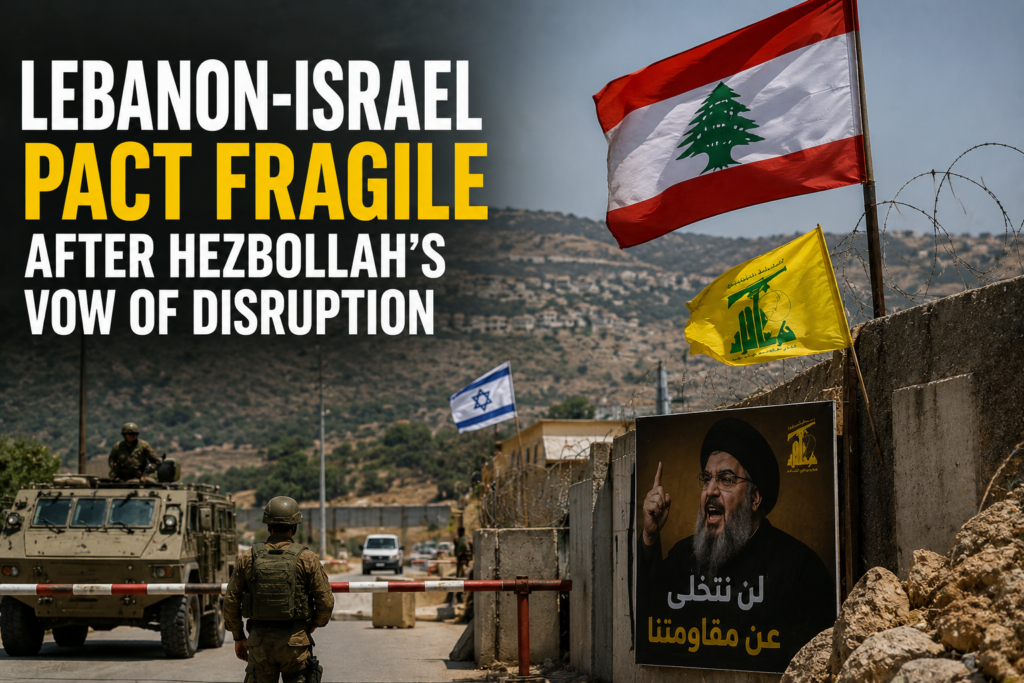
The fragile understanding between Lebanon and Israel is facing renewed uncertainty after Hezbollah vowed to challenge aspects of the agreement, raising concerns about regional stability. The development has intensified fears that recent efforts to reduce tensions along the border could be undermined by fresh political and military disputes.
Hezbollah leaders have criticized the terms of the arrangement, arguing that they do not adequately address key security and territorial concerns. The group has warned it will oppose measures it believes threaten Lebanon’s interests, although the exact nature of its response remains unclear.
Regional and international officials continue to urge restraint, emphasizing that maintaining calm along the Israel-Lebanon border is essential to preventing another major conflict. Diplomatic efforts are ongoing to preserve communication between all parties and reduce the risk of accidental escalation.
Military analysts note that the border has remained one of the Middle East’s most sensitive flashpoints for decades. Any breakdown in the current understanding could increase the likelihood of cross-border incidents and further destabilize the region.
Despite the latest tensions, both Lebanon and Israel face significant economic and security challenges that make a prolonged conflict undesirable. International mediators are expected to continue working with both sides to strengthen the agreement and encourage dialogue. Observers say the coming weeks will be crucial in determining whether the truce can withstand growing political and security pressures.