
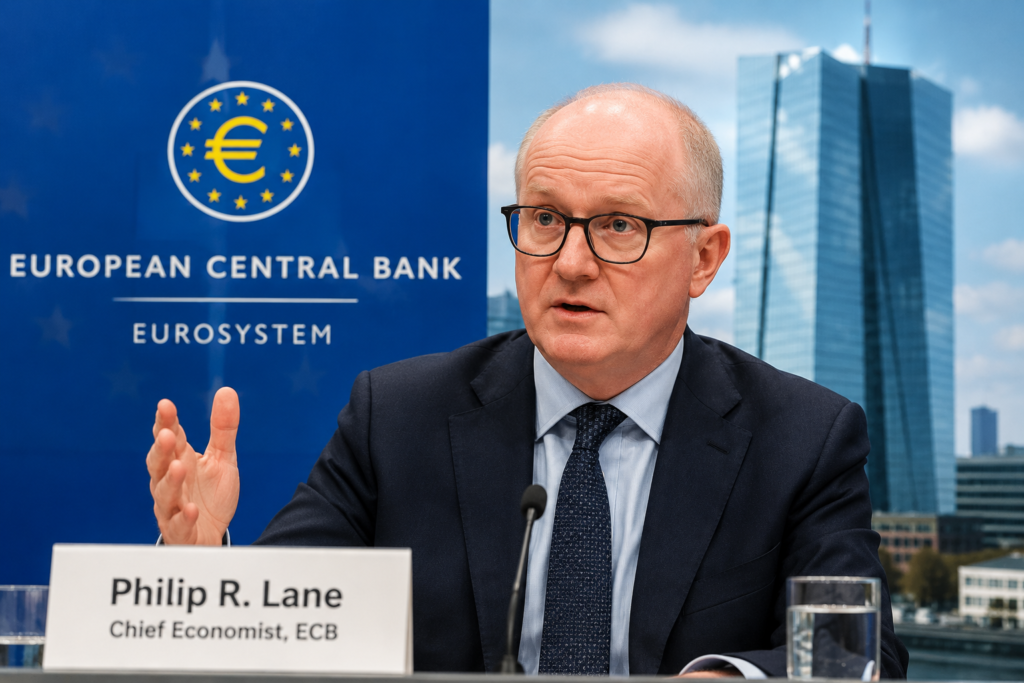
European Central Bank (ECB) officials remain focused on inflation risks as chief economist Philip Lane shifts attention toward monitoring the “price pipeline”—the flow of costs moving through the economy that could influence future consumer prices.
Although inflation across the eurozone has eased from recent highs, policymakers say underlying price pressures remain a concern. Rising wages, energy costs, supply chain developments, and business pricing decisions continue to play an important role in determining whether inflation returns sustainably to the ECB’s 2% target.
Lane has emphasized that the central bank must closely examine how production costs translate into consumer prices before making further interest rate decisions. Officials believe this broader analysis will help determine whether inflation is becoming permanently under control or if additional policy adjustments may be required.
Financial markets are closely watching every statement from ECB policymakers for clues about the future direction of monetary policy. Investors, businesses, and households are particularly interested in whether borrowing costs could fall further or remain elevated for longer.
Economists say the ECB is likely to continue taking a cautious, data-driven approach, balancing the need to support economic growth while preventing inflation from rising again. Upcoming economic reports on wages, consumer prices, and business activity will play a key role in shaping future policy decisions as the central bank seeks to maintain price stability across the eurozone.