
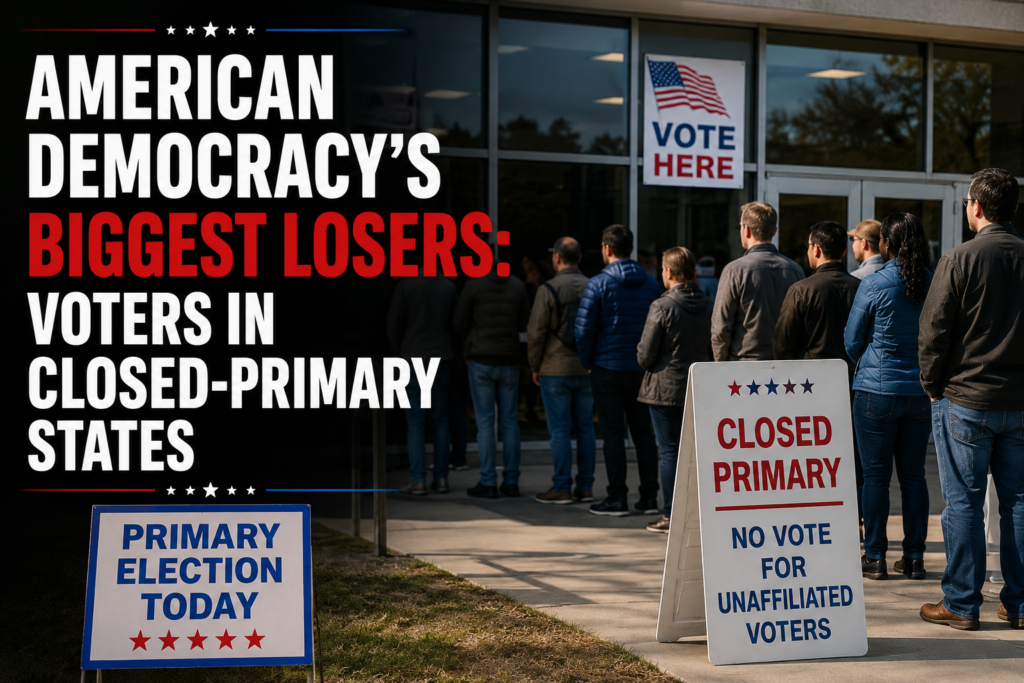
Millions of American voters living in states with closed primary elections continue to face restrictions that critics say limit political participation and reduce voter influence. Under the closed-primary system, only registered members of a political party are allowed to vote in that party’s primary election, leaving many independent and unaffiliated voters unable to help choose candidates.
Supporters of the system argue that political parties should have the right to select their own nominees without outside influence. They believe closed primaries protect party values and ensure that loyal members determine who represents them in general elections.
Critics, however, say the system discourages voter participation and weakens democratic representation. With a growing number of Americans identifying as independent rather than Republican or Democrat, many voters are excluded from key elections that often determine the eventual winner in heavily partisan districts.
Election experts note that primary contests have become increasingly important, as many congressional and state legislative races are effectively decided before the general election. This has sparked renewed debate over whether states should adopt open or semi-open primary systems that allow broader voter participation.
As election reforms continue to be discussed across the United States, lawmakers, advocacy groups, and election officials remain divided over how to balance party rights with broader democratic participation. The debate is expected to remain a major issue ahead of future national and state elections.