
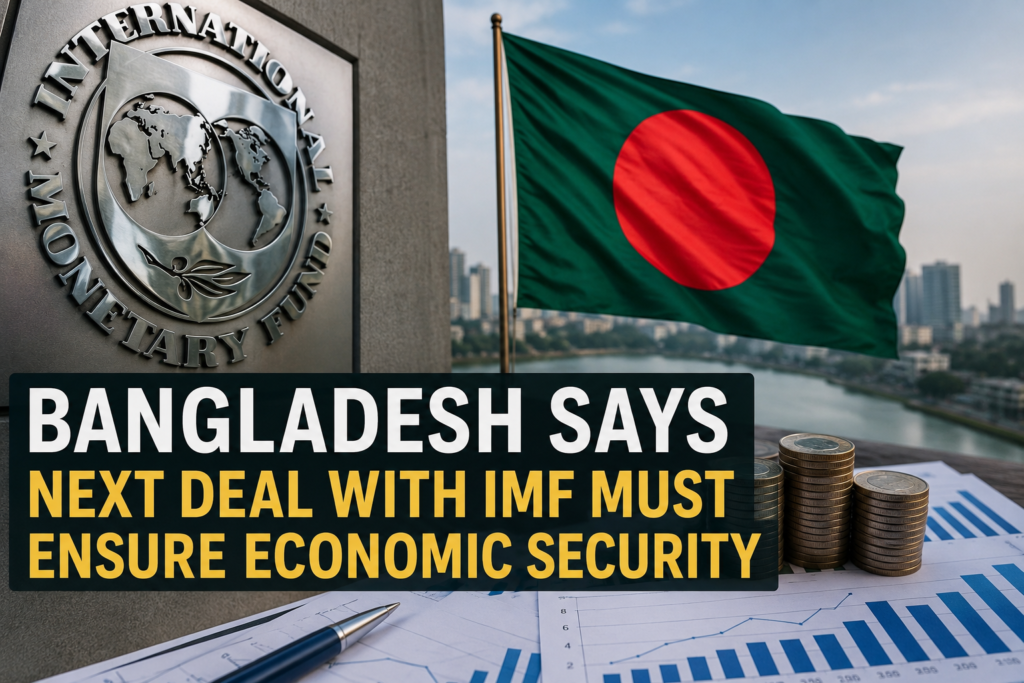
Bangladesh has said its next financial support agreement with the International Monetary Fund (IMF) must prioritize the country’s long-term economic security alongside continued reforms. Government officials emphasized that future cooperation with the IMF should strengthen economic resilience while supporting sustainable growth, financial stability, and social development.
The country has been working closely with the IMF to implement a series of economic reforms aimed at improving public finances, strengthening foreign exchange reserves, and controlling inflation. Officials say these measures have helped stabilize parts of the economy but stress that future programs should also consider Bangladesh’s development goals and the well-being of its citizens.
Bangladesh continues to face several economic challenges, including rising import costs, global inflation, pressure on foreign currency reserves, and climate-related risks. The government believes that any future IMF package should provide flexibility to invest in infrastructure, energy security, food production, healthcare, and education while maintaining fiscal discipline.
Authorities also highlighted the importance of creating jobs, supporting exports, and attracting foreign investment as key pillars of long-term economic security. Bangladesh’s garment industry remains the country’s largest export sector, but policymakers are seeking to diversify the economy by expanding technology, pharmaceuticals, agriculture, and manufacturing.
Economists note that IMF programs often require fiscal reforms, subsidy adjustments, and improvements in tax collection. While such measures can strengthen economic stability, governments also seek to balance reforms with policies that protect vulnerable communities from rising living costs.
The IMF has expressed support for Bangladesh’s reform agenda and continues to work with the government on strengthening financial institutions and improving economic governance. Future discussions are expected to focus on maintaining macroeconomic stability while encouraging inclusive and sustainable growth.
As negotiations continue, Bangladesh aims to secure an agreement that not only addresses immediate financial needs but also lays the foundation for stronger economic resilience, greater investment, and long-term prosperity in an increasingly uncertain global economy.