
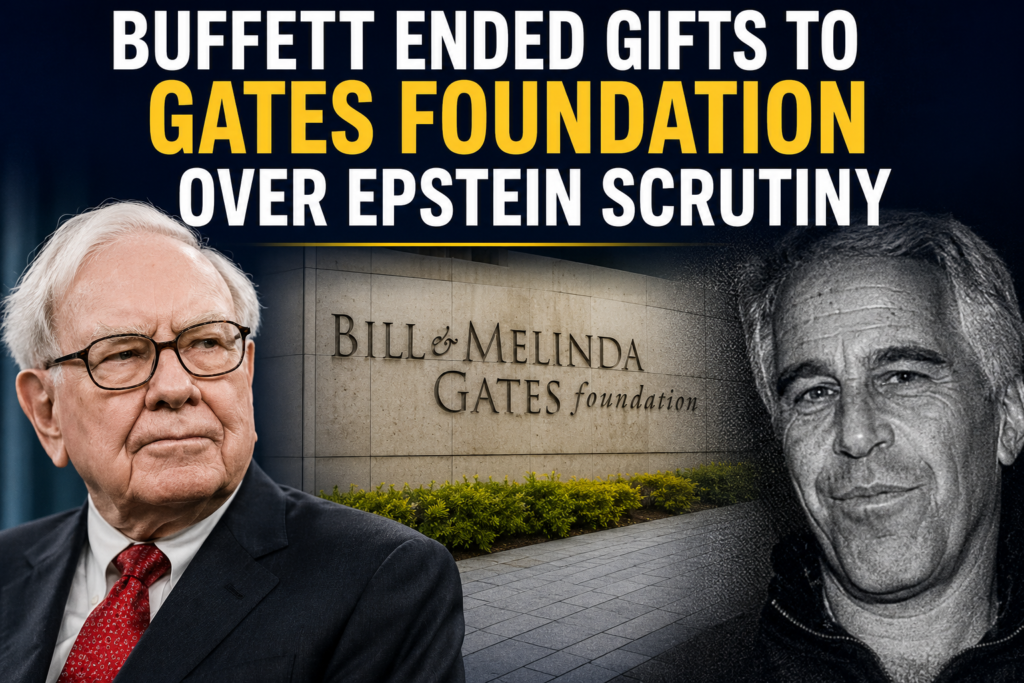
Billionaire investor Warren Buffett reportedly decided to stop making charitable donations to the Bill & Melinda Gates Foundation after concerns emerged over the foundation’s association with the late financier Jeffrey Epstein.
The development has renewed public interest in governance, transparency, and reputational risks surrounding major philanthropic organizations.According to reports, Buffett became uncomfortable with the scrutiny surrounding Epstein’s past interactions with Bill Gates and chose to redirect his charitable giving elsewhere.
While Buffett has donated billions of dollars to the Gates Foundation over the years, the decision marked a significant shift in one of the largest philanthropic partnerships in history.Jeffrey Epstein, who died in 2019 while awaiting trial on federal sex trafficking charges, had maintained relationships with numerous prominent figures.
Although Bill Gates has acknowledged meeting Epstein several times after Epstein’s conviction, Gates has repeatedly stated that the meetings were a mistake and denied any business or personal relationship beyond discussions about philanthropy.The Gates Foundation has consistently emphasized that it operates independently under strict governance standards and remains focused on global health, poverty reduction, education, and development initiatives.Corporate governance experts note that high-profile charitable organizations face increasing expectations regarding transparency, accountability, and ethical leadership.
Even indirect associations with controversial individuals can affect public perception and donor confidence.Buffett has continued his philanthropic efforts through donations to other charitable organizations and foundations, maintaining his long-standing commitment to giving away the majority of his wealth.The episode highlights how reputation and public trust remain essential assets for global philanthropic institutions. As charitable organizations manage billions of dollars in donations, maintaining strong governance and ethical standards continues to be critical for preserving credibility and ensuring continued public support.