
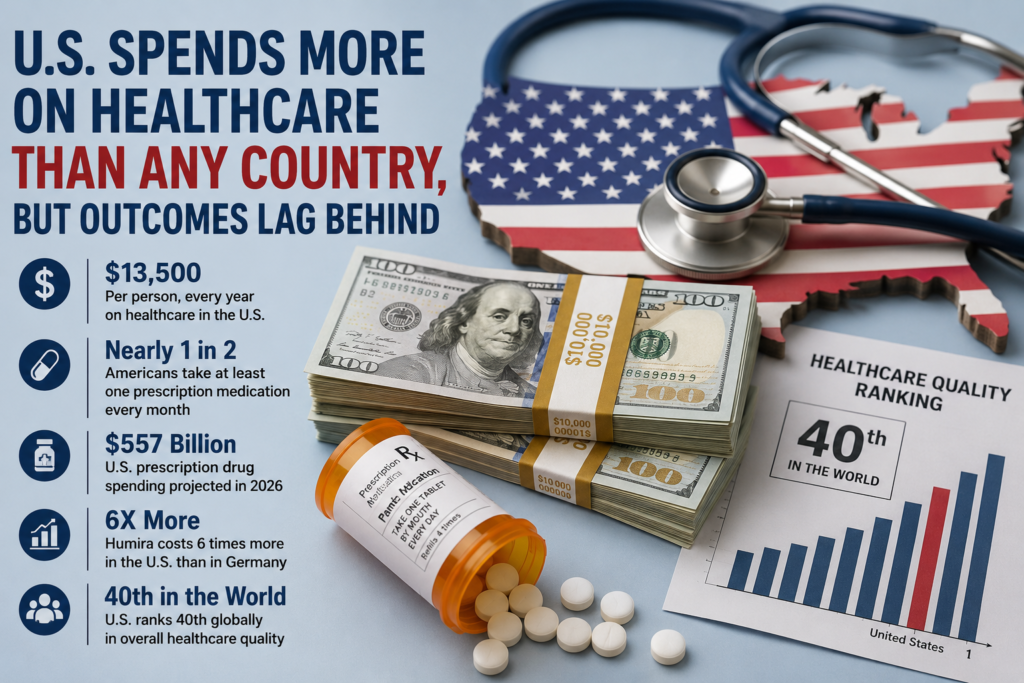
Americans spend an average of about $13,500 per person each year on healthcare, more than twice the average of many other developed countries. Yet despite this record level of spending, the U.S. continues to struggle with chronic disease, high prescription drug costs, and uneven health outcomes.
Consider a few facts:
Nearly half of Americans report taking at least one prescription medication each month.
U.S. prescription drug spending is projected to exceed $550 billion in 2026.
Some medications, such as Humira, have historically cost several times more in the U.S. than in countries with government price negotiations.
Unlike many developed nations, the U.S. generally relies more on market-based pricing for prescription drugs.
Chronic conditions, obesity, and mental health challenges remain widespread despite increasing healthcare expenditures.
One question continues to spark debate: Why does the highest spending not consistently produce the best results?
Many health experts argue that healthcare systems often devote more resources to treating illness after it develops than to preventing it in the first place. Preventive care, healthier lifestyles, early screening, and public health initiatives can improve long-term outcomes, but they don’t always receive the same level of investment or attention.
Healthcare is also a complex industry involving hospitals, insurers, pharmaceutical companies, employers, and government programs, all with different financial incentives and priorities.
One thing remains clear: investing in your own health through exercise, balanced nutrition, quality sleep, stress management, and regular preventive checkups can be just as important as investing for your financial future.