
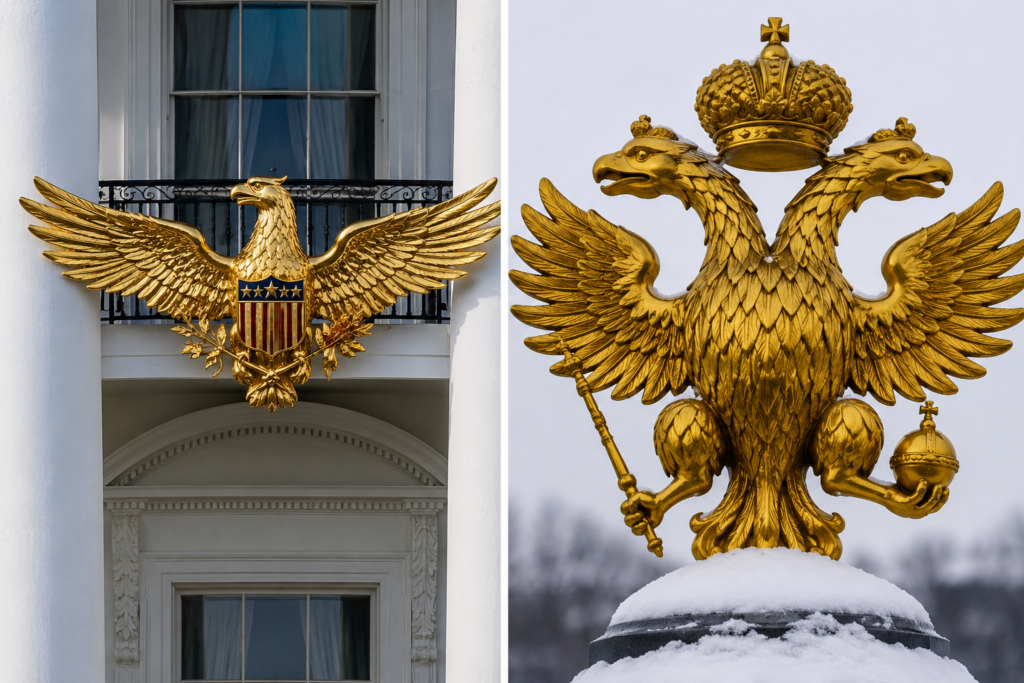
A recently shared image featuring a golden eagle displayed at the White House has generated widespread discussion across social media, with critics pointing to what they describe as several design inaccuracies. The image, shared in connection with President Donald Trump, quickly attracted attention from historians, designers, and online users who questioned whether the artwork accurately represented the iconic American bald eagle.
Commentators highlighted details such as the eagle’s appearance, proportions, and symbolic elements, arguing that the design differed from traditional depictions associated with the United States. Others compared the artwork to European and Russian imperial emblems, fueling further debate online.
Supporters dismissed the criticism as politically motivated, arguing that the image was intended as decorative artwork rather than an official government seal. They maintained that the controversy was being exaggerated by opponents.
Political analysts say the incident reflects how even symbolic imagery can become a focal point in today’s highly polarized political environment. Social media platforms amplified the discussion, with thousands of users sharing memes, comparisons, and differing opinions about the design.
The White House has not issued a detailed response regarding the online criticism. Meanwhile, the debate continues to highlight how visual symbols, national identity, and political messaging often become subjects of intense public scrutiny.
While opinions remain divided, the episode demonstrates the powerful role that images and symbolism play in shaping public conversation in modern politics.