
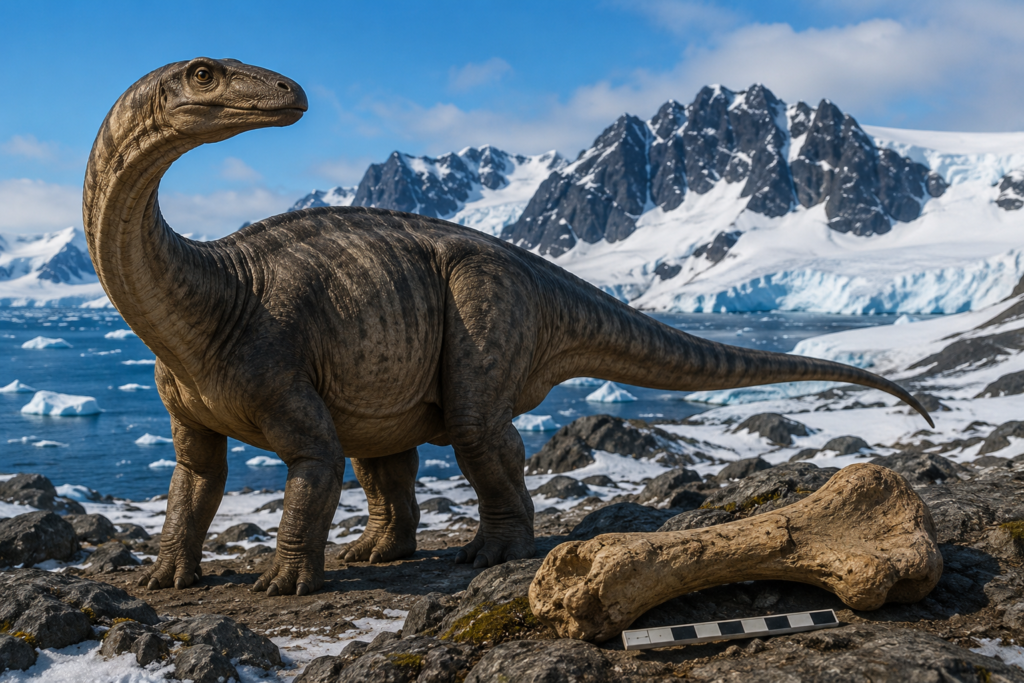
A remarkable scientific discovery has revealed that the first dinosaur bone ever found in Antarctica remained unidentified for nearly 40 years before researchers recognized its true significance. The fossil, originally collected during an expedition decades ago, was stored in museum collections until modern analysis confirmed it belonged to a dinosaur that lived millions of years ago when Antarctica was part of the ancient supercontinent Gondwana.
Researchers from the British Antarctic Survey re-examined the fossil using advanced techniques, allowing scientists to identify characteristics that had previously gone unnoticed. The finding offers valuable new insights into the prehistoric wildlife that once thrived in Antarctica before the continent became covered in ice.
Experts say the discovery highlights the importance of preserving museum collections, as many historical specimens can still provide groundbreaking scientific information. The fossil also strengthens evidence that dinosaurs inhabited Antarctica alongside species found in South America, Africa, and Australia during the age of dinosaurs.
Scientists believe further exploration of Antarctica’s rocky regions could uncover additional fossils, helping researchers better understand how dinosaurs adapted to changing climates and ancient ecosystems.
The rediscovery has generated excitement within the scientific community, demonstrating that important breakthroughs can emerge from specimens collected decades earlier. As technology continues to improve, researchers hope more forgotten fossils will reveal new chapters in Earth’s prehistoric history and deepen our understanding of dinosaur evolution across the southern continents.