
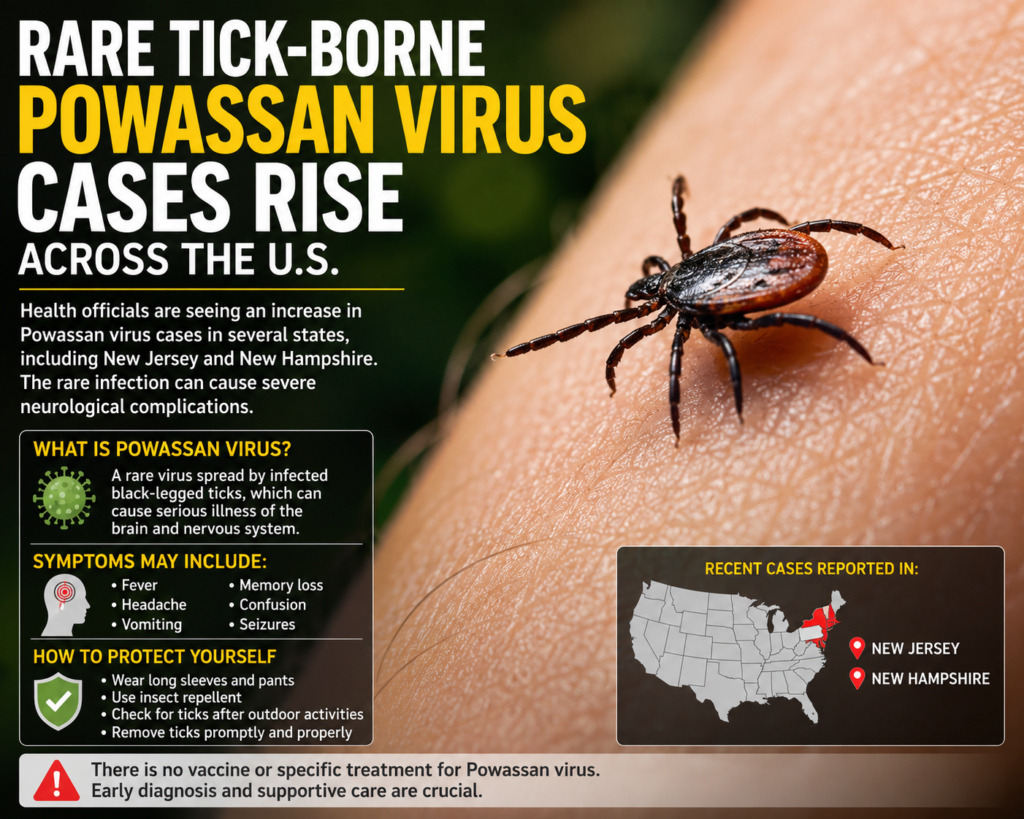
Health officials in the United States are closely monitoring a rise in reported cases of Powassan virus, a rare but potentially serious tick-borne disease. Recent infections in states including New Jersey and New Hampshire have drawn national attention because of the virus’s ability to cause severe neurological complications in some patients.
The Powassan virus is primarily spread through the bite of infected black-legged ticks, which are also known to transmit Lyme disease. While infections remain uncommon, medical experts warn that the virus can lead to brain inflammation, memory problems, confusion, difficulty speaking, seizures, and, in severe cases, long-term disability or death.
Early symptoms may include fever, headache, vomiting, and weakness. Because there is currently no specific antiviral treatment or vaccine for Powassan virus, doctors focus on supportive care for patients with severe illness.
Public health authorities recommend taking preventive measures, especially during outdoor activities in wooded or grassy areas. Wearing long sleeves and pants, using EPA-approved insect repellents, checking the body for ticks after spending time outdoors, and removing attached ticks promptly can significantly reduce the risk of infection.
Experts stress that although the overall number of Powassan virus cases remains low, increasing awareness and preventive action are essential as tick populations continue to expand in several parts of the United States.