
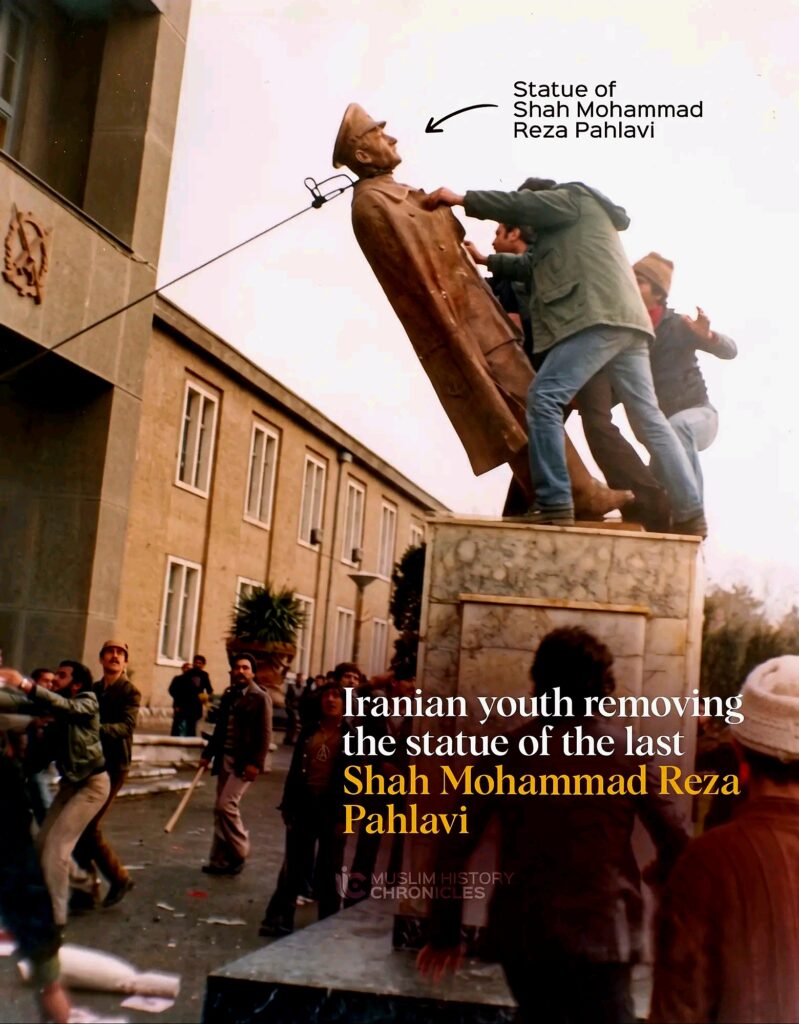
The removal of Shah Mohammad Reza Pahlavi’s statues became one of the defining images of the Iranian Revolution, symbolizing the public’s rejection of the monarchy. Across cities and towns, crowds gathered to pull down monuments that had long represented the Shah’s rule, reflecting the growing strength of the revolutionary movement.
By late 1978, Iran was experiencing widespread protests, labor strikes, and civil unrest. The government’s ability to maintain control weakened as demonstrations continued to expand across the country. The movement brought together a diverse coalition of religious leaders, students, workers, merchants, and intellectuals, many of whom shared concerns about political repression, economic inequality, and the Shah’s close relationship with Western powers.
In January 1979, Mohammad Reza Pahlavi left Iran after months of escalating unrest. On February 1, 1979, Ayatollah Ruhollah Khomeini returned from exile to a massive public استقبال, marking a pivotal moment in the revolution. Within weeks, the monarchy was abolished, and the Islamic Republic of Iran was established.
The fall of the Shah’s statues remains one of the most recognizable symbols of this historic transformation, representing the end of a monarchy that had ruled Iran for decades and the beginning of a new political era that continues to influence the country and the wider Middle East.