
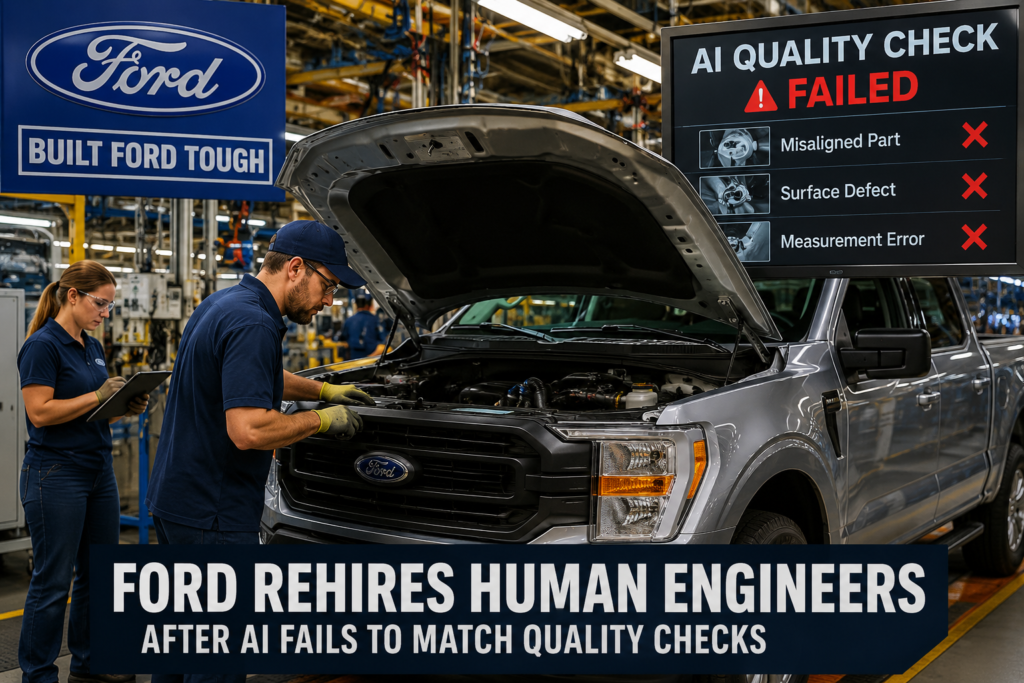
Ford has reportedly expanded the role of human engineers in parts of its vehicle quality inspection process after finding that artificial intelligence alone could not consistently meet the company’s high manufacturing standards. The move highlights the continuing importance of skilled workers, even as automakers invest heavily in automation and AI-powered technologies.
According to reports, AI systems proved effective at handling repetitive tasks and identifying many common defects. However, they struggled with certain complex inspections that require human judgment, experience, and the ability to recognize subtle issues affecting a vehicle’s overall quality.
Ford emphasized that artificial intelligence remains an important part of its manufacturing strategy, helping improve efficiency and speed across production lines. Rather than replacing employees entirely, the company is increasingly using AI as a tool to support engineers, allowing people and technology to work together.
Industry experts say the decision reflects a broader trend across advanced manufacturing. While AI continues to transform factories, human expertise remains essential for final decision-making, quality assurance, and solving unexpected problems that machines may overlook.
The development serves as a reminder that the future of manufacturing is likely to be built on collaboration between humans and artificial intelligence, combining technological innovation with the experience and critical thinking of skilled professionals to deliver reliable, high-quality products for customers.