
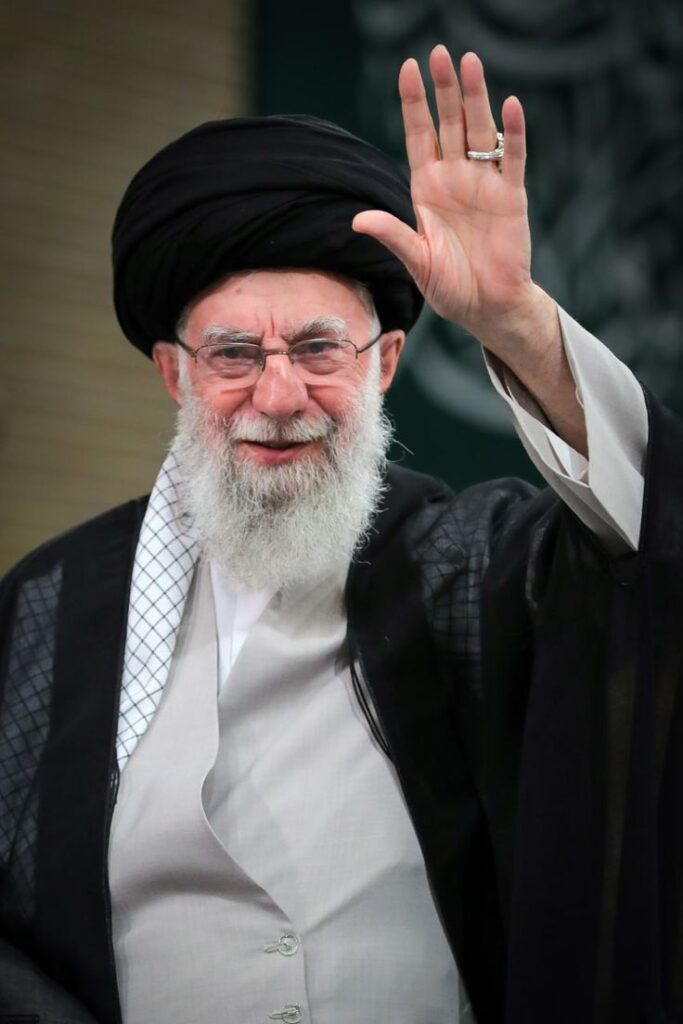
Ayatollah Seyyed Ali Hosseini Khamenei is one of the most influential political and religious leaders in the Middle East. Since 1989, he has served as the Supreme Leader of Iran, making him the country’s highest authority over the government, military, judiciary, and foreign policy. His leadership has shaped Iran’s domestic politics and its relations with the United States, Israel, and neighboring countries for more than three decades.
Born on April 19, 1939, in Mashhad, Iran, Khamenei was raised in a religious family. His father, Ayatollah Seyyed Javad Khamenei, was a respected Islamic scholar, while his mother, Khadijeh Mirdamadi, came from a clerical family. Growing up in modest financial circumstances, Khamenei devoted his early years to Islamic education and religious studies.
As a young student, he studied theology in Mashhad before continuing his education in the holy city of Qom, where he learned under several prominent Shiite scholars, including Ayatollah Ruhollah Khomeini. Inspired by Khomeini’s opposition to Shah Mohammad Reza Pahlavi, Khamenei became involved in political activism during the 1960s and 1970s. His anti-government activities led to several arrests and periods of imprisonment by the Shah’s security forces.
Following the 1979 Iranian Revolution, Khamenei quickly emerged as one of the new Islamic Republic’s senior leaders. He held several key positions, including Deputy Defense Minister and Tehran’s Friday Prayer leader. In 1981, after the assassination of President Mohammad Ali Rajai, Khamenei was elected as Iran’s third president. During his presidency (1981–1989), Iran faced the devastating Iran-Iraq War, which significantly influenced the country’s political and military development.
When Ayatollah Ruhollah Khomeini died in 1989, Iran’s Assembly of Experts selected Khamenei as the country’s second Supreme Leader. Although some questioned his religious qualifications at the time, he gradually consolidated power and became the central figure in Iran’s political system.
As Supreme Leader, Khamenei commands the armed forces, appoints the heads of the judiciary, state broadcasting, military leadership, and many senior officials. He also has significant influence over foreign policy and nuclear strategy. Under his leadership, Iran has expanded its regional influence through alliances with groups and governments across the Middle East while maintaining a firm stance against Western pressure and sanctions.
Khamenei has consistently supported Iran’s nuclear program, insisting that it is intended for peaceful purposes. He has also overseen negotiations that resulted in the 2015 nuclear agreement while later criticizing the United States after Washington withdrew from the deal.
Family
Ali Khamenei is married to Mansoureh Khojasteh Bagherzadeh. The couple has six children:
Mostafa Khamenei
Mojtaba Khamenei
Masoud Khamenei
Meysam Khamenei
Boshra Khamenei
Hoda Khamenei
Among them, Mojtaba Khamenei has frequently attracted public attention because of reports that he plays an influential role within Iran’s political establishment, although his exact responsibilities remain unclear.
Wealth
Khamenei’s personal wealth has long been the subject of international debate. Various media reports have alleged that organizations linked to the Supreme Leader control assets worth tens of billions of dollars through foundations and investment holdings. However, these estimates are disputed, and there is no publicly verified figure for his personal net worth. Iranian authorities have consistently rejected claims that he personally controls such wealth.
Health
Over the years, there have been recurring reports and speculation about Khamenei’s health due to his advanced age. He underwent prostate surgery in 2014 and has occasionally appeared with a cane, but he has continued performing his official duties. Iranian officials have repeatedly stated that he remains capable of carrying out his responsibilities.
Death Rumors
As of now, Ayatollah Ali Khamenei is alive. Numerous rumors regarding his death have circulated online over the years, but none have been confirmed. He continues to issue public statements, meet officials, and oversee state affairs.
Funeral
According to the latest widely reported information, Ayatollah Ali Khamenei’s funeral ceremonies began on July 4, 2026, in Tehran, with processions continuing through several cities. He was buried on July 9, 2026, at the Imam Reza Shrine in Mashhad, his hometown.
Death: February 28, 2026
Funeral ceremonies: July 4–9, 2026
Burial: July 9, 2026, Imam Reza Shrine, Mashhad