
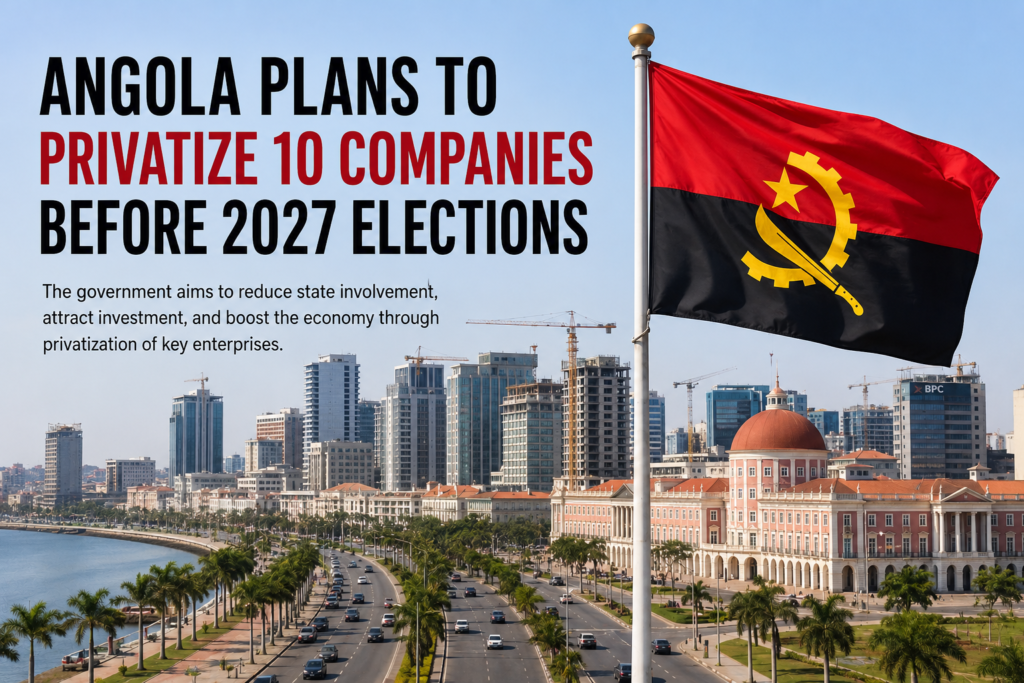
The Angolan government has announced plans to privatize 10 state-owned companies before the 2027 general elections, as part of its broader strategy to strengthen the economy, attract foreign investment, and improve the efficiency of public enterprises.
The privatization program is expected to include businesses operating in sectors such as energy, transportation, manufacturing, finance, and logistics. By transferring ownership to private investors, the government hopes to reduce the financial burden on the state while encouraging innovation, competition, and better corporate management.
Officials say the initiative is part of Angola’s long-term economic reform agenda aimed at diversifying the country’s economy beyond its heavy reliance on oil exports. Increased private-sector participation is expected to create jobs, boost productivity, and improve public services through greater investment.
The government also believes privatization will help attract international investors by demonstrating its commitment to market-oriented reforms and transparent business practices. Successful sales could generate additional revenue for public finances while supporting economic growth.However, the program is likely to face close public and political scrutiny. Critics have called for transparent bidding processes to ensure state assets are sold fairly and that privatization benefits the wider economy rather than a small group of investors. Labor unions have also raised concerns about potential job losses during the transition.
Economic analysts say the success of the reforms will depend on strong regulation, investor confidence, and continued political stability. If implemented effectively, the privatization program could modernize key industries and strengthen Angola’s investment climate.As the country prepares for the 2027 elections, the planned sale of state-owned companies is expected to become a major part of Angola’s economic policy, shaping the nation’s business environment and long-term development strategy.