
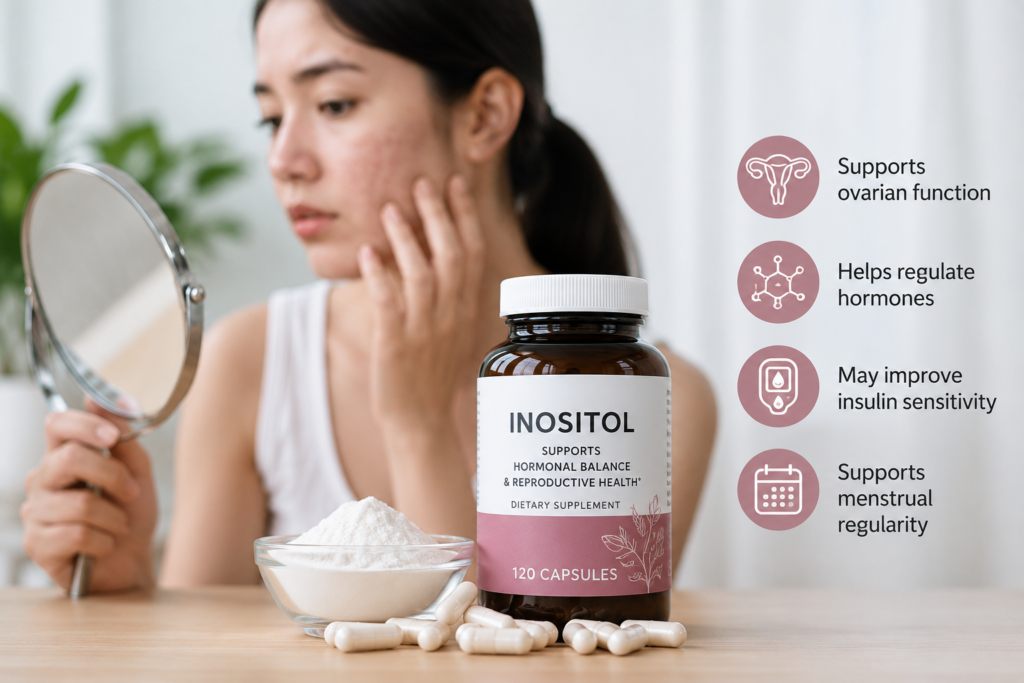
Inositol has become one of the most talked-about dietary supplements on social media, particularly among women seeking support for hormonal health, fertility, and metabolic conditions. Marketed as a natural compound that may help regulate insulin levels and improve ovarian function, inositol has gained attention for its potential role in managing symptoms associated with polycystic ovary syndrome (PCOS).
Several clinical studies suggest that certain forms of inositol, especially myo-inositol, may improve ovulation, insulin sensitivity, and menstrual regularity in some women with PCOS. However, health experts caution that while the evidence is encouraging, the supplement is not a miracle cure and may not produce the same results for everyone.
Doctors recommend consulting a healthcare professional before starting inositol, particularly for people who are pregnant, taking prescription medications, or managing chronic health conditions. The correct dosage and formulation can vary depending on individual needs.
Nutritionists also emphasize that supplements work best alongside a balanced diet, regular physical activity, adequate sleep, and overall healthy lifestyle habits. Social media testimonials can be helpful for sharing personal experiences, but they should not replace evidence-based medical advice.
As interest in inositol continues to grow, experts agree that more large-scale research is needed to fully understand its long-term benefits, safety, and effectiveness for different health conditions.