
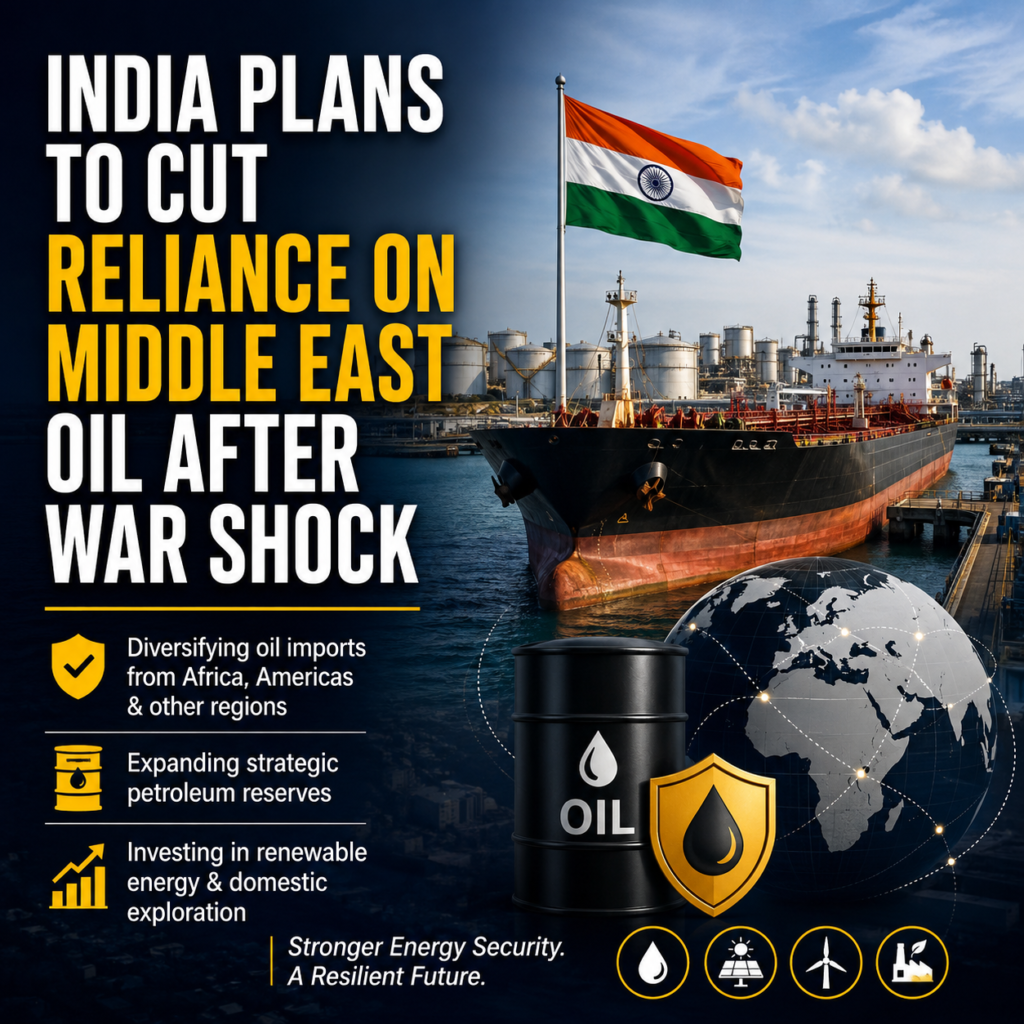
India is taking steps to diversify its crude oil imports following recent geopolitical tensions in the Middle East that exposed the risks of relying heavily on a single region for energy supplies. Policymakers and energy companies are exploring alternative sources to strengthen the country’s long-term energy security.
The conflict in the Middle East disrupted global oil markets, leading to concerns over supply stability and price volatility. Although India continued receiving crude oil during the crisis, officials are working to reduce future risks by increasing imports from countries in Africa, the Americas, and other energy-producing regions.
India, the world’s third-largest importer of crude oil, depends on overseas suppliers for more than 80 percent of its oil needs. A broader import strategy is expected to help protect the economy from sudden geopolitical shocks and ensure a more reliable supply of fuel.
Energy experts say India is also expanding its strategic petroleum reserves and investing in renewable energy, biofuels, and domestic exploration to reduce long-term dependence on imported fossil fuels. These initiatives are part of the country’s broader goal of improving energy resilience while supporting economic growth.
Government officials maintain that diversification does not mean abandoning Middle Eastern suppliers but creating a balanced import portfolio. Analysts believe the strategy will strengthen India’s bargaining power, improve supply security, and help stabilize energy costs amid an increasingly uncertain global geopolitical environment.