
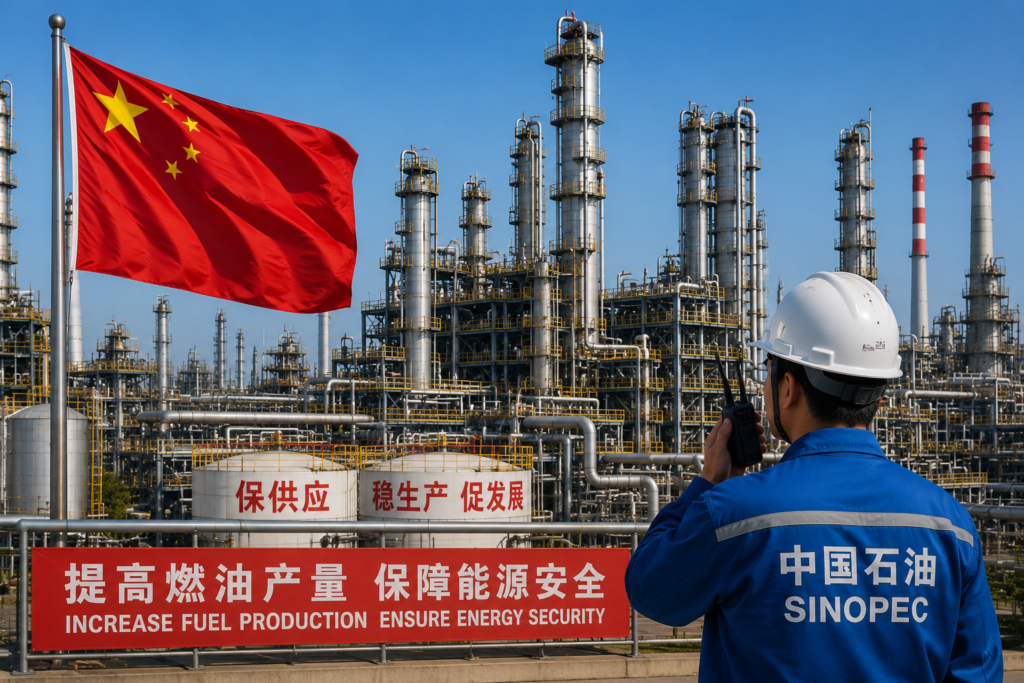
China has instructed its major oil refiners to maintain high fuel production levels as the prolonged conflict involving Iran continues to create uncertainty in global energy markets.
The move reflects Beijing’s effort to strengthen domestic fuel supplies while preparing for potential disruptions in crude oil shipments and rising international energy prices.State-owned refiners have reportedly been encouraged to maximize refinery operations and ensure stable production of gasoline, diesel, and jet fuel.
Officials are closely monitoring global oil markets as tensions in the Middle East remain elevated, raising concerns about supply routes through the Strait of Hormuz, one of the world’s most important oil transit corridors.China is the world’s largest importer of crude oil, with a significant portion of its imports originating from the Middle East.
Any prolonged instability in the region could affect shipping costs, insurance premiums, and the availability of crude oil, making domestic fuel security a top priority for policymakers.Analysts believe the government’s decision is also aimed at supporting economic activity during the peak summer travel and industrial season.
Higher refinery output can help stabilize domestic fuel prices while ensuring industries, transportation networks, and airlines continue to receive adequate supplies.Global energy traders are watching developments closely, as any escalation in the Iran conflict could push crude oil prices higher and increase inflationary pressures worldwide.
China has been expanding its strategic petroleum reserves and diversifying its sources of crude imports in recent years to reduce dependence on any single region.
The latest directive highlights Beijing’s focus on energy security amid growing geopolitical uncertainty. While international markets remain volatile, China’s strategy seeks to balance domestic demand with stable fuel production, helping protect its economy from sudden supply shocks.
Investors and energy companies will continue monitoring both geopolitical developments and China’s refining activity, as the country’s decisions often influence global oil demand and fuel market trends.