
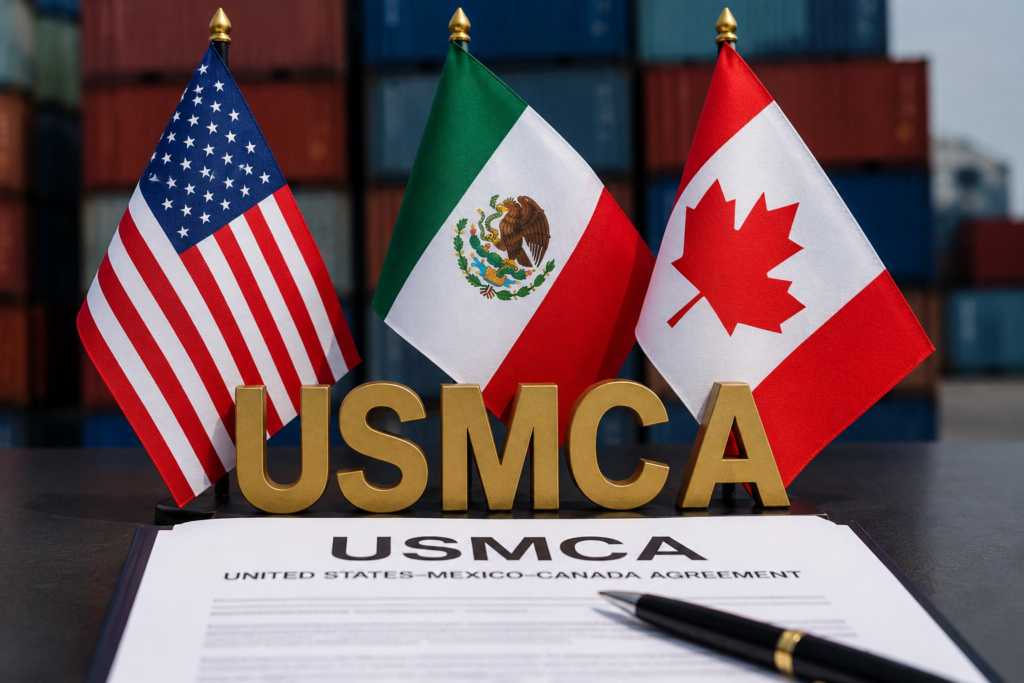
The future of North American trade is under renewed scrutiny as policymakers and business leaders debate how the United States will manage economic ties with Canada and Mexico after recent actions that have weakened confidence in the United States-Mexico-Canada Agreement (USMCA). The trade pact has long served as the foundation for regional commerce, supporting industries such as manufacturing, agriculture, automotive production, and energy.
Analysts warn that increasing tariffs, shifting trade policies, and political uncertainty could disrupt supply chains that have become deeply integrated across North America. Companies may face higher production costs, delays in cross-border shipments, and reduced investment if trade tensions continue to rise.
Canada and Mexico remain among America’s largest trading partners, making stable economic relations essential for regional growth. Business groups are urging all three governments to strengthen cooperation, modernize trade rules, and resolve disputes through negotiations rather than prolonged legal or political battles.
Economists believe the coming years will determine whether North America can maintain its competitive advantage against rapidly growing economies in Asia and Europe. Policymakers are expected to focus on balancing domestic manufacturing goals with the need for open and predictable trade relationships.
As discussions continue, businesses and investors are closely monitoring developments, knowing that any significant changes to USMCA policies could reshape the region’s economic future and influence global supply chains for years to come.