
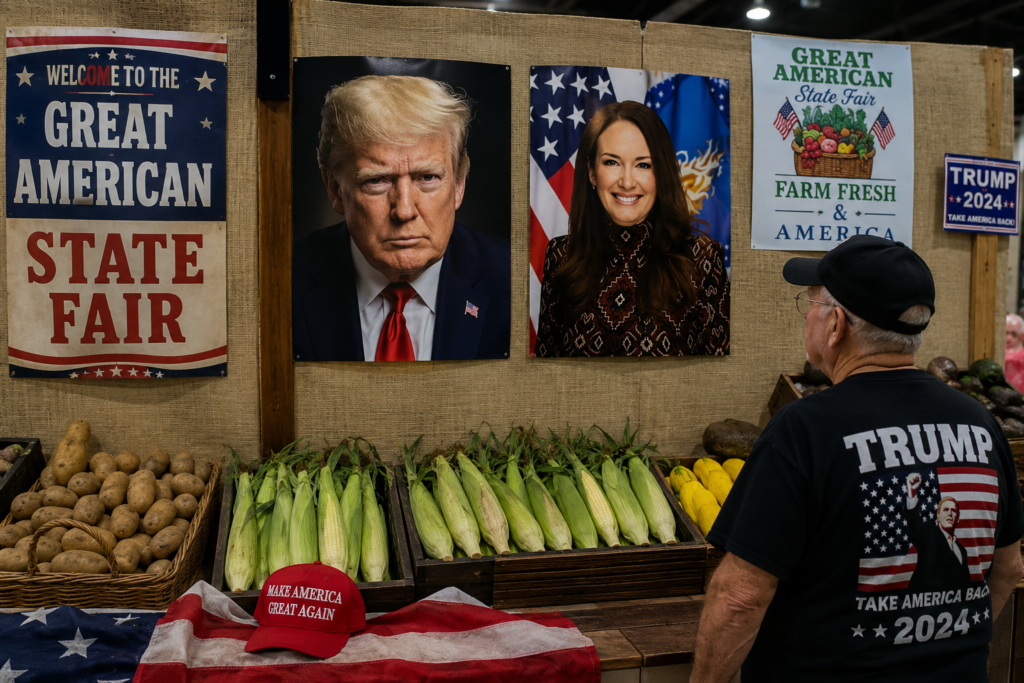
Former U.S. President Donald Trump has sparked renewed political debate after making a series of claims about the “Great American State Fair,” a MAGA-themed event that has reportedly struggled to attract large crowds. In a lengthy social media post, Trump defended the gathering and criticized media coverage, arguing that reports describing the event as poorly attended were inaccurate and politically motivated.
The controversy quickly gained attention online, with supporters praising Trump for standing by the event while critics questioned the accuracy of his statements. Images and videos circulating on social media fueled further discussion, with some suggesting attendance was lower than expected. Organizers, however, insisted the fair remained successful and highlighted speeches, entertainment, and activities designed to appeal to conservative supporters.
Political analysts say the episode reflects the growing importance of social media in shaping public opinion and controlling political narratives. Trump has frequently challenged mainstream reporting, using his own platform to communicate directly with supporters and counter criticism.
The debate surrounding the fair has become another example of how political events are increasingly judged not only by attendance but also by online perception. As the 2026 U.S. political season continues, Trump’s comments and public appearances remain closely watched, with every statement generating significant media coverage and discussion across political and social platforms.