
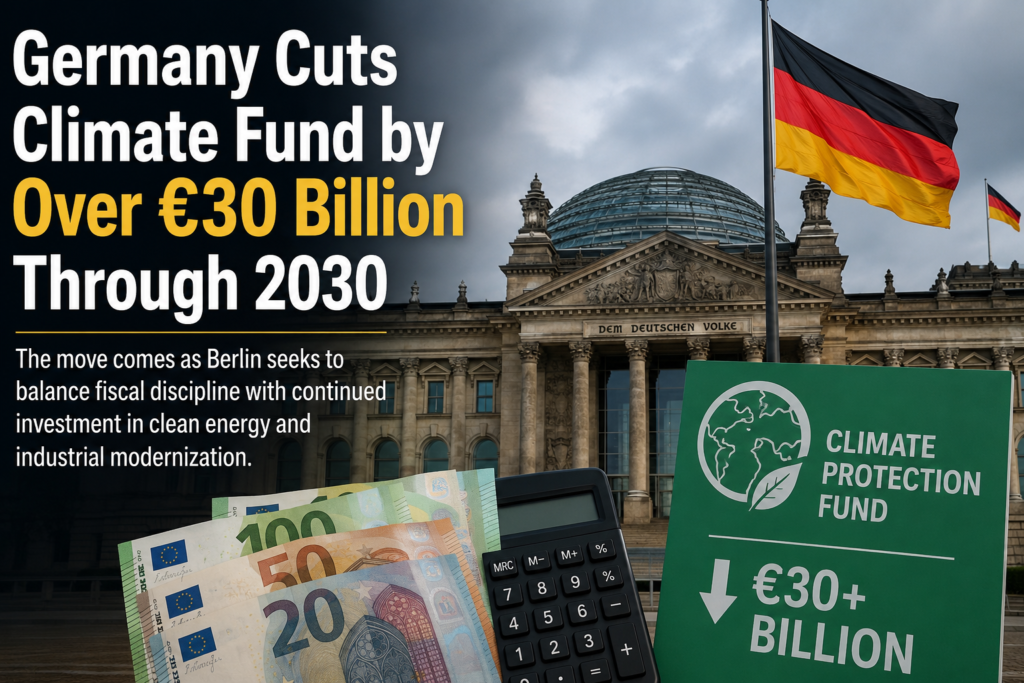
Germany has announced plans to reduce its national climate and transformation fund by more than €30 billion through 2030, marking a significant shift in the country’s spending priorities.
The move comes as Berlin seeks to balance fiscal discipline with continued investment in clean energy and industrial modernization.
The Climate and Transformation Fund has been a key source of financing for renewable energy projects, electric vehicle incentives, hydrogen development, energy-efficient buildings, and industrial decarbonization. Despite the planned reduction, government officials say Germany remains committed to achieving its long-term climate targets and supporting the transition to a low-carbon economy.
The spending cuts follow mounting budget pressures and a constitutional court ruling that limited the government’s ability to reallocate unused borrowing. As a result, policymakers have been forced to reassess major spending programs while maintaining compliance with Germany’s fiscal rules.
Business groups and environmental organizations have expressed concern that reduced funding could slow investments in clean technologies and weaken Germany’s competitiveness in the global green economy. Industry leaders warn that stable government support is essential for attracting private investment in renewable energy and sustainable manufacturing.
Government officials, however, argue that available resources will be directed toward the highest-priority projects and that private-sector investment will continue playing a larger role in financing the country’s energy transition.
The decision comes as Europe accelerates efforts to reduce greenhouse gas emissions, improve energy security, and expand renewable power generation.
Germany remains one of the European Union’s largest economies and a central player in the bloc’s climate strategy.Analysts will closely monitor how the revised funding plan affects Germany’s clean energy ambitions, industrial competitiveness, and progress toward meeting its climate commitments by the end of the decade.