
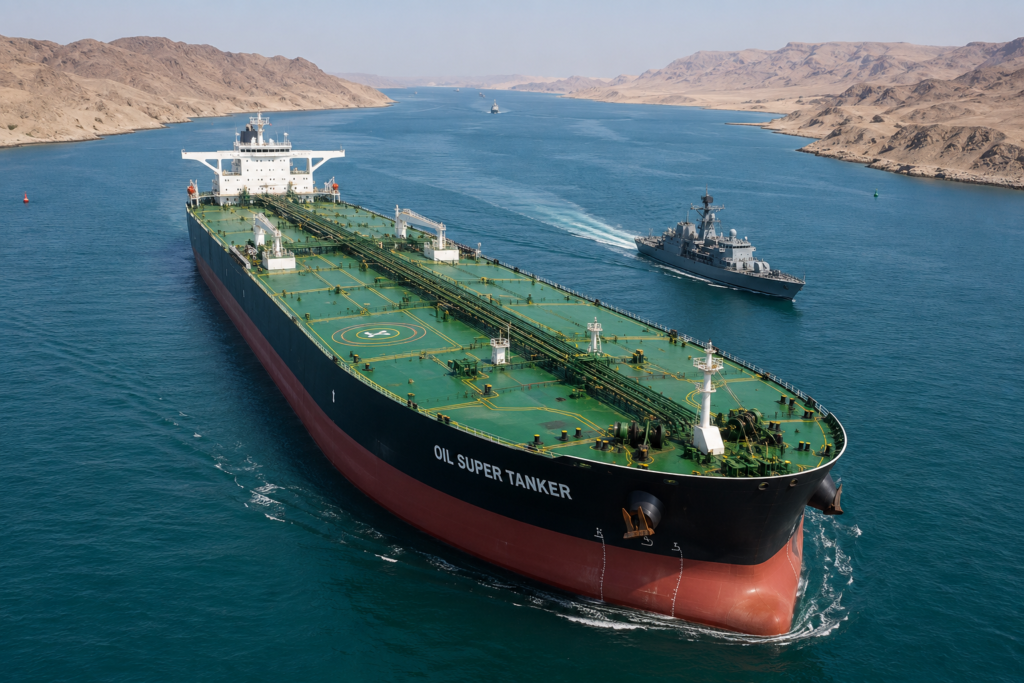
Oil supertankers are increasingly becoming targets of security threats in the Strait of Hormuz, raising concerns about the safety of one of the world’s most critical energy shipping routes.
The narrow waterway handles roughly one-fifth of global oil shipments, making it essential to international energy markets and global trade.Recent attacks and attempted seizures involving commercial vessels have heightened tensions in the region.
Shipping companies are responding by strengthening security measures, adjusting routes where possible, and paying higher insurance premiums to protect cargo and crews.
Energy analysts warn that continued instability in the Strait of Hormuz could disrupt crude oil exports from major producers in the Middle East, potentially leading to higher global oil prices and increased transportation costs. Even isolated incidents can create uncertainty in financial markets because of the strategic importance of the shipping lane.
Governments and international naval forces have increased patrols to safeguard commercial vessels traveling through the area. Shipping firms are also working closely with maritime security agencies to monitor threats and improve emergency response procedures.
The increased risks come amid ongoing geopolitical tensions in the Middle East, where regional conflicts continue to affect maritime security. Tanker operators must carefully balance safety concerns with the need to maintain reliable energy supplies to customers around the world.
Industry experts believe that protecting the Strait of Hormuz will remain a top priority for governments and global energy companies, as prolonged disruptions could have significant economic consequences.
Stable shipping lanes are essential for maintaining international trade, controlling energy prices, and ensuring uninterrupted supplies of crude oil to major importing nations.As security concerns persist, the global shipping industry is expected to remain on high alert while closely monitoring developments in one of the world’s most strategically important maritime corridors.