
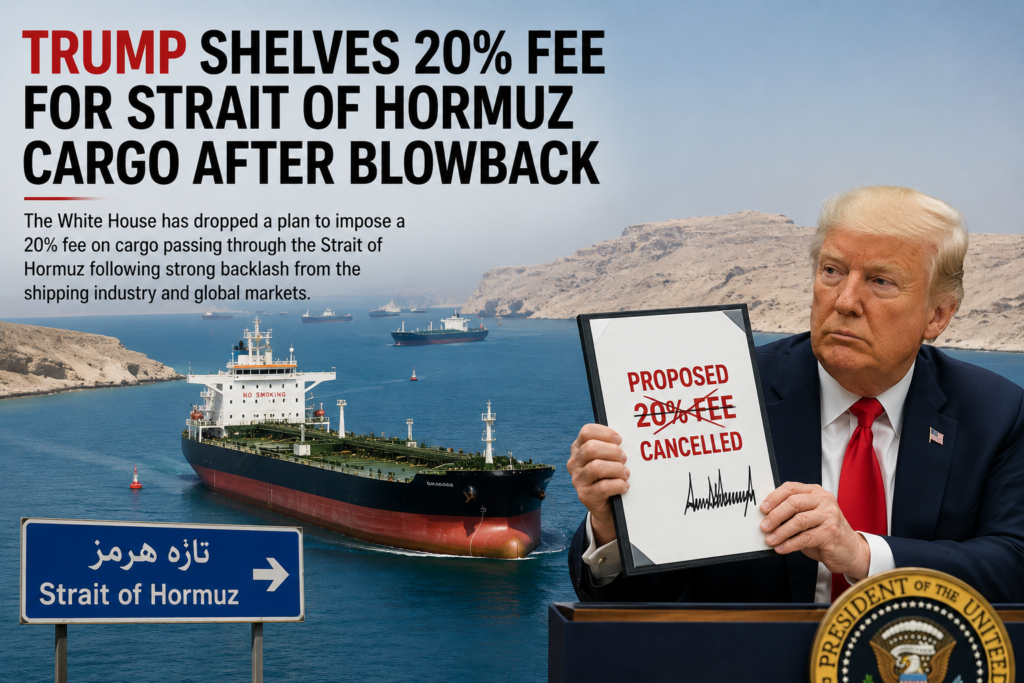
U.S. President Donald Trump has decided to shelve a proposed 20% fee on cargo passing through the Strait of Hormuz after facing strong opposition from shipping companies, energy traders, and business groups. The proposal had raised concerns about higher transportation costs and its potential impact on global trade and energy markets.
The Strait of Hormuz is one of the world’s most important maritime chokepoints, with a significant share of global crude oil, liquefied natural gas (LNG), and other commodities passing through the narrow waterway every day. Any additional costs on cargo moving through the strait could have increased shipping expenses and contributed to higher fuel and consumer prices worldwide.
Industry representatives argued that the proposed fee would place an unnecessary financial burden on global shipping while disrupting supply chains already facing geopolitical uncertainty
Many analysts also warned that the measure could increase market volatility and strain trade relations with key international partners.Following widespread criticism, the administration reportedly decided not to move forward with the proposal. Officials emphasized the importance of maintaining stable trade flows while continuing efforts to protect international shipping routes and regional security.
Energy markets responded positively to the news, with investors viewing the decision as a step toward reducing uncertainty surrounding global oil transportation. Shipping companies also welcomed the move, saying it helps preserve predictable operating costs.The development comes amid ongoing tensions in the Middle East, where the security of the Strait of Hormuz remains a critical concern for governments and energy producers worldwide.
Despite shelving the proposed fee, U.S. officials are expected to continue monitoring developments in the region closely.The decision highlights the balancing act between national security objectives and the need to maintain efficient global trade, particularly in one of the world’s most strategically important shipping corridors.