
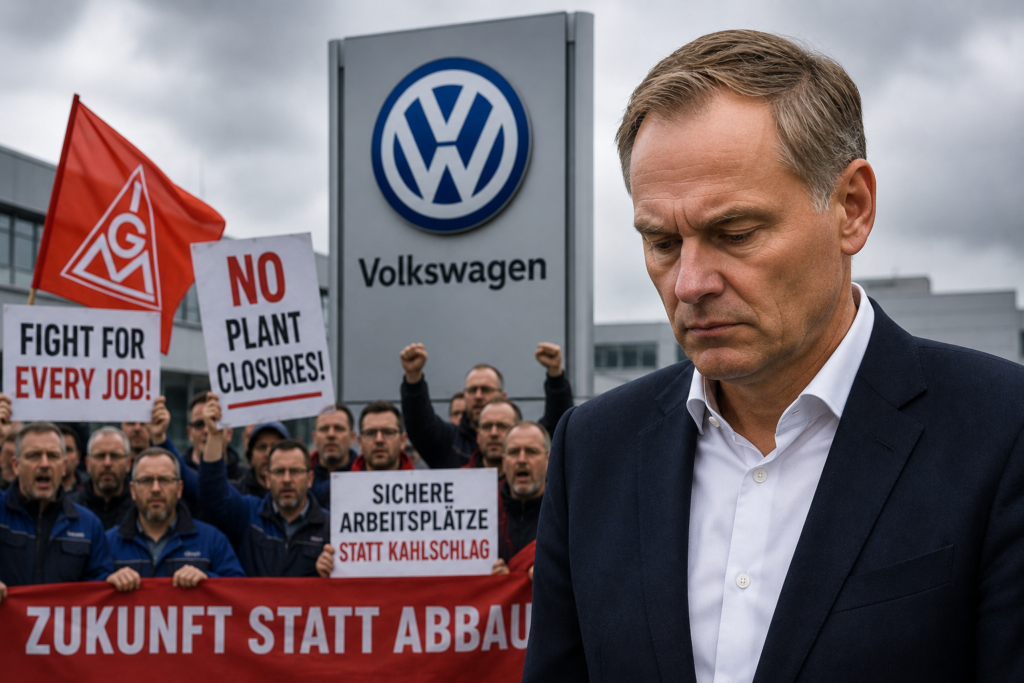
Volkswagen CEO Oliver Blume is facing growing pressure after labor unions strongly opposed key parts of the automaker’s proposed revival strategy, raising fresh concerns about the company’s efforts to improve profitability and remain competitive in the rapidly evolving global automotive market.
The dispute centers on Volkswagen’s plans to cut costs, streamline operations, and accelerate its transition toward electric vehicles. Company executives argue that the measures are necessary to compete with increasingly aggressive rivals, particularly Chinese EV manufacturers and established global automakers investing heavily in new technologies.
However, powerful labor unions and employee representatives have criticized several aspects of the proposed restructuring. They argue that cost-cutting measures could threaten jobs, reduce worker protections, and weaken the company’s long-standing commitment to its workforce. Union leaders have called for negotiations that balance financial stability with employment security.
Volkswagen has historically maintained a close relationship with labor representatives, who hold significant influence through Germany’s co-determination system. As a result, major corporate decisions often require broad support from employee representatives, making restructuring efforts more complex than at many other global companies.
The disagreement comes at a critical time for Europe’s largest automaker. Volkswagen faces slowing demand in some markets, rising production costs, growing competition from Chinese electric vehicle manufacturers, and increasing pressure to deliver advanced software and battery technologies.
Investors are closely watching whether the company can execute its transformation without triggering prolonged labor disputes.Analysts believe resolving tensions with unions will be essential for Volkswagen’s long-term success. A prolonged conflict could delay planned investments, affect production schedules, and reduce confidence among shareholders and customers.
Despite the challenges, company executives have reaffirmed their commitment to open dialogue with employee representatives. Volkswagen says it remains focused on building a financially sustainable business while protecting as many jobs as possible throughout its transition to electric mobility.
The outcome of the negotiations could significantly influence Volkswagen’s future strategy and serve as an important example for other European manufacturers facing similar challenges as the global automotive industry undergoes one of its biggest transformations in decades.