
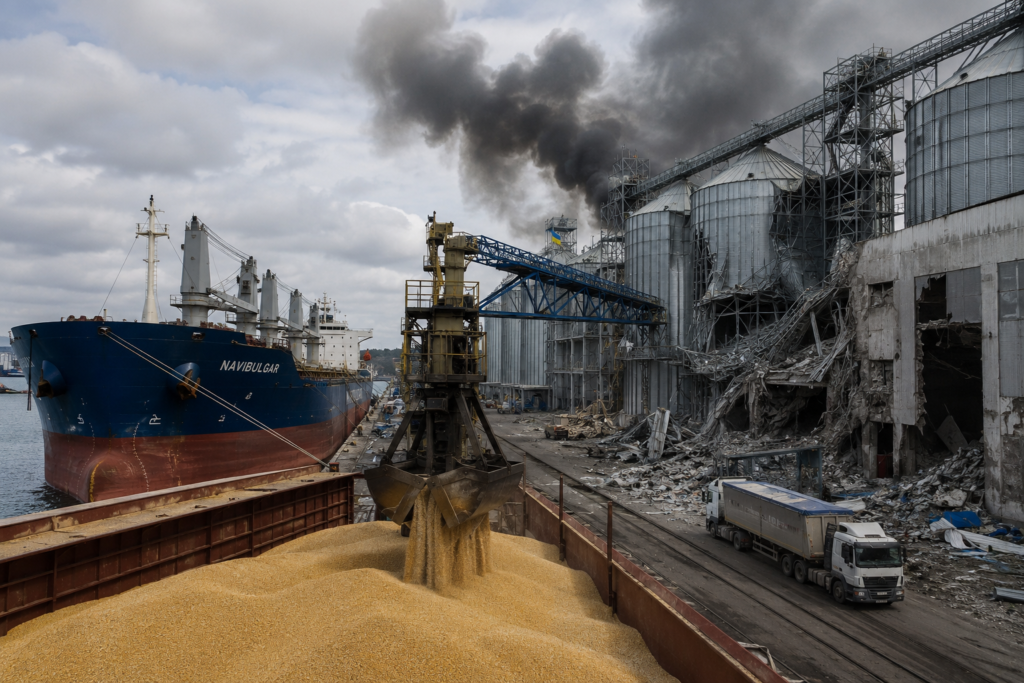
Fresh attacks between Russia and Ukraine have intensified concerns over global food security after key grain export gateways in the Black Sea region were reportedly targeted. The strikes affected infrastructure linked to grain transportation and storage, raising fears of further disruptions to one of the world’s most important agricultural export corridors.
The Black Sea has long served as a vital route for exporting wheat, corn, barley, and sunflower oil from both Russia and Ukraine. Together, the two countries account for a significant share of global grain exports, supplying markets across Europe, the Middle East, Africa, and Asia.
Any interruption to these shipments can quickly influence global food prices and supply chains.According to reports, recent attacks damaged facilities near major ports and transport routes, slowing grain handling operations. Authorities are assessing the extent of the damage while emergency repair work continues. Shipping companies are also reviewing security conditions before allowing vessels to enter affected areas.
The renewed escalation has once again highlighted the vulnerability of agricultural exports during ongoing conflict. Since the war began, several agreements aimed at ensuring the safe passage of grain shipments have faced repeated setbacks, contributing to volatility in international food markets.
Analysts warn that prolonged disruptions could increase transportation costs and reduce grain availability in countries heavily dependent on imports. Nations in Africa and the Middle East are considered particularly vulnerable to any decline in Black Sea exports.Global commodity markets reacted cautiously as traders monitored developments in the region.
Wheat futures showed renewed volatility amid uncertainty over future supplies. International organizations continue to urge both sides to protect civilian infrastructure and maintain secure trade routes to prevent further pressure on global food supplies.
While export activity has not completely stopped, experts say continued military action near critical ports and logistics hubs could significantly impact global agricultural trade in the coming weeks. Governments and humanitarian agencies are closely watching the situation, emphasizing the importance of keeping essential food supply chains functioning despite the ongoing conflict.