
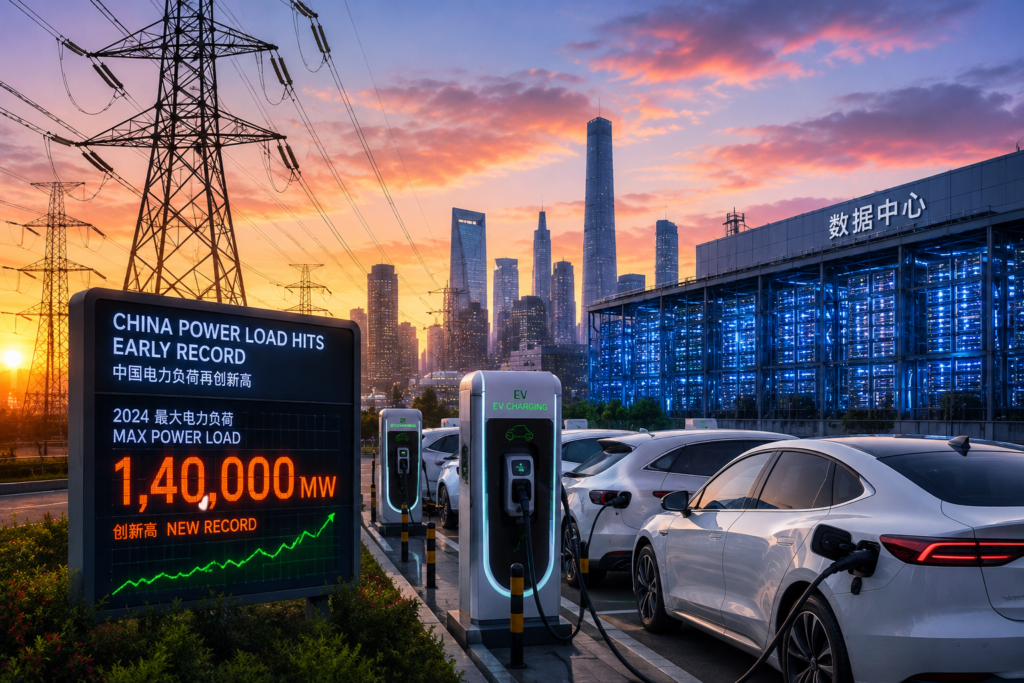
China’s electricity consumption has climbed to a record level earlier than expected this year, driven by surging demand from data centers, electric vehicles (EVs), advanced manufacturing, and extreme summer temperatures.
The milestone highlights the country’s rapidly expanding digital economy and growing dependence on electricity to support industrial production and emerging technologies.Industry analysts say the rapid growth of artificial intelligence has significantly increased power usage, as AI training and cloud computing require massive data centers operating around the clock.
At the same time, China’s leadership in electric vehicle production and battery manufacturing has added further pressure on the national power grid.Power demand has also been boosted by heavy use of air conditioning during heatwaves affecting several provinces.
Electricity providers have responded by increasing output from coal-fired plants while also relying on renewable energy sources such as solar, wind, and hydropower to meet peak demand.China has invested heavily in upgrading its electricity infrastructure, including ultra-high-voltage transmission lines and large-scale energy storage projects.
Officials say these investments are helping balance supply between energy-producing regions and major industrial centers.The record power consumption reflects China’s broader economic transformation, where technology, manufacturing, and clean energy industries are becoming major drivers of growth.
The government continues to encourage renewable energy expansion while ensuring grid stability to prevent shortages during periods of peak demand.Energy experts believe electricity demand will continue rising over the next decade as AI applications become more widespread, EV adoption increases, and digital services expand across the country.
This trend is expected to accelerate investment in nuclear power, renewable energy, battery storage, and smart grid technologies.While the new demand record demonstrates China’s industrial strength and technological progress, it also presents challenges for policymakers seeking to balance economic growth with environmental goals.
Meeting future electricity needs while reducing carbon emissions remains one of the country’s biggest long-term priorities as it works toward its climate commitments and energy transition objectives.